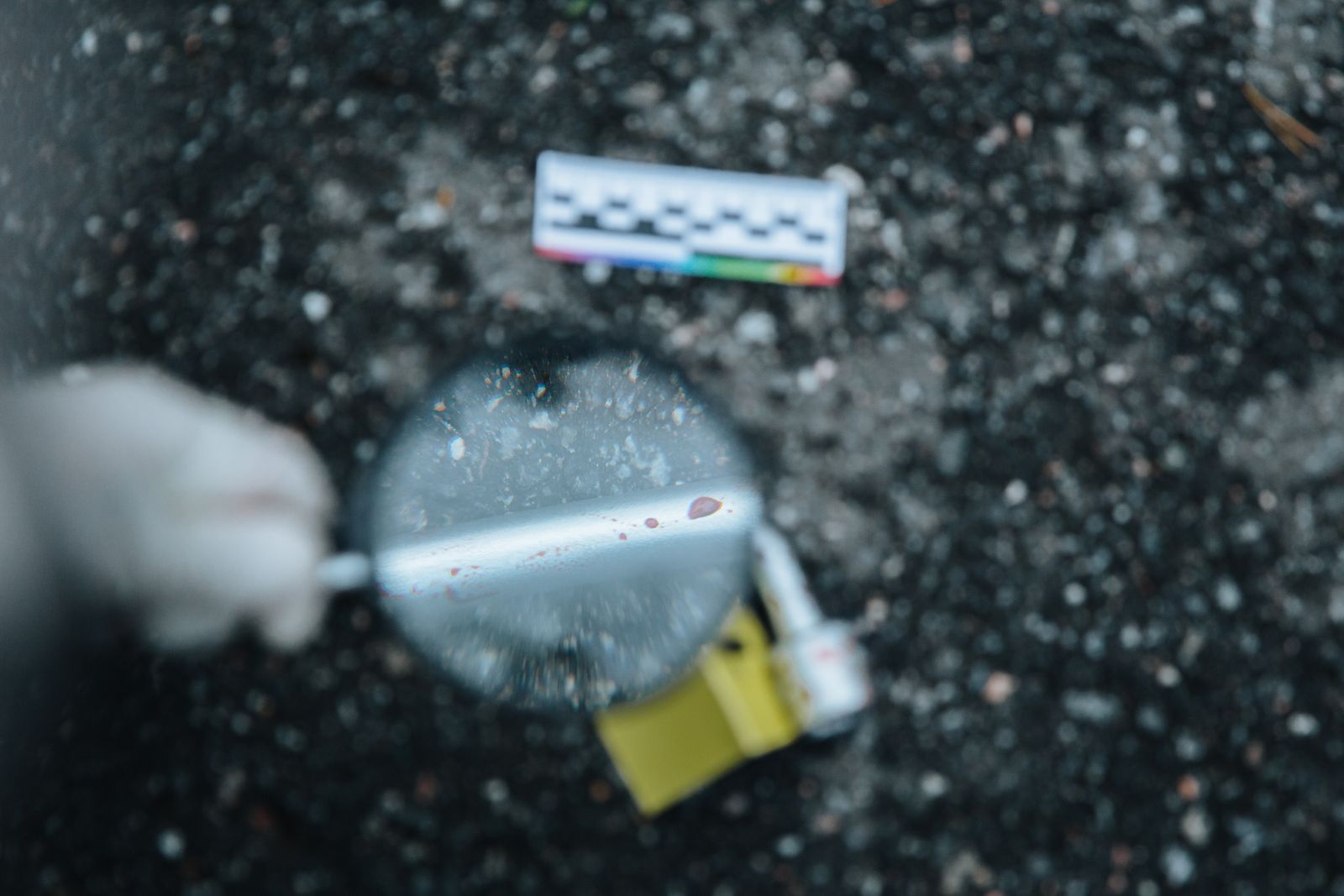
TL;DR: Forensic examiners treat a photo as two evidence sources at once: the metadata wrapped around the pixels, and the pixels themselves. From the EXIF block they pull GPS coordinates accurate to a few metres, the DateTimeOriginal capture timestamp, the camera make and model, and — through the MakerNote — often a device serial number that ties separate images to one physical camera. When metadata has been stripped or faked, they fall back on the sensor itself: photo-response non-uniformity (PRNU), a noise pattern unique to each sensor that survives in every frame it shoots. Tamper checks like error-level analysis, double-JPEG detection, and the mismatched EXIF thumbnail expose edits. None of it is magic, and user-editable fields are treated as unreliable until corroborated.
What can forensic examiners pull from a single photo?
A photo straight off a phone is not just an image — it is an image with a structured record attached. That record is EXIF, stored in an APP1 marker segment that opens with the bytes Exif\0\0, and forensic examiners read it the same way the rest of us read a caption. The fields that carry evidential weight are a short list. DateTimeOriginal records the moment the shutter fired. The GPS IFD holds latitude and longitude if location services were on. Make and Model name the camera or phone, and Software reveals what last wrote the file — a clue that a photo passed through an editor. Buried in the proprietary MakerNote, many cameras also stamp a body serial number, lens data, and a frame count.
Individually, each field is a small fact. Together they let an examiner answer the three questions an investigation usually starts with: when was this taken, where, and with what. If you have never seen the raw contents of one of these blocks, our primer on what EXIF data actually is walks through the structure field by field. The reason this data matters in court is precisely that most people never touch it — it is written automatically and forgotten, which makes it a candid witness.
How does metadata place a device at a time and place?
The single most consequential field is GPS. Modern smartphones tag photos with coordinates accurate to roughly three to five metres, written into the GPS IFD alongside an altitude and, often, a separate GPS timestamp pulled from satellite time. For an investigator, that converts a photo into a pin on a map and a moment on a clock. Match that pin to a crime scene and that clock to a window of opportunity, and an image that was meant to be a trophy or an alibi becomes the opposite. We covered the law-enforcement angle of this in detail in how police can track you through photo metadata, and the mechanics of the tag itself in how GPS coordinates get embedded in photos.
The most famous illustration is not a crime scene but a fugitive. In December 2012, while John McAfee was on the run, Vice published a photo of him with one of its editors. The iPhone 4S that took it had left the EXIF intact, and within hours observers had read the GPS coordinates straight out of the file and placed him at a specific spot in Guatemala. Scientific American dissected McAfee's "rookie mistake" as a textbook case of metadata betraying its subject. The same discipline drives open-source investigations: groups like Bellingcat treat EXIF as one input among many, cross-checking any embedded coordinate against visible landmarks, as their guide on the uses and creepiness of metadata lays out.
 Photo by RDNE Stock project on Pexels.
Can a photo be traced to one specific camera?
Yes — and remarkably, this works even when the metadata has been wiped. The technique is photo-response non-uniformity, or PRNU. No two image sensors are manufactured identically; microscopic variations mean each pixel responds to light a fraction differently from its neighbours. That pattern of variation is deterministic, stable over the life of the sensor, and independent of what the photo actually shows. In effect, every sensor stamps a faint, invisible fingerprint into every frame it captures.
An examiner extracts that fingerprint by averaging the residual noise across many images known to come from a suspect device, then tests whether the same pattern is present in a questioned image. A strong correlation links the photo to that specific camera — not just the model, the individual unit. The approach has been studied since the mid-2000s and is widely used in source-camera identification for exactly the cases where EXIF is missing or untrusted. It is powerful, but it is not infallible: PRNU is degraded by heavy compression, cropping, and aggressive image processing, and it can be deliberately suppressed by counter-forensic attacks. Examiners treat a PRNU match as strong corroboration, not a lone smoking gun.
How do experts spot a doctored image?
When the question is not where but whether — whether an image is authentic — the pixels do most of the talking, and several techniques work together. Error-level analysis re-saves a JPEG at a known quality and maps where the compression error is uneven; a region pasted in from another file often compresses differently from its surroundings. Double-JPEG detection looks for the statistical fingerprint of an image that has been decoded and re-encoded, which is what happens whenever someone opens a JPEG in an editor and saves it again — the DCT coefficient histograms carry traces of two passes rather than one.
The simplest tell is often the EXIF thumbnail. Cameras embed a small preview inside the metadata, and many editing tools fail to regenerate it after a change. Crop a figure out of the corner of a photo and the full-frame original can still be sitting in the thumbnail, unedited. None of these methods is decisive on its own — error-level analysis in particular is a heuristic that is easy to over-read — but in combination they let an examiner say whether an image is a straight-out-of-camera capture or something that has been worked on.
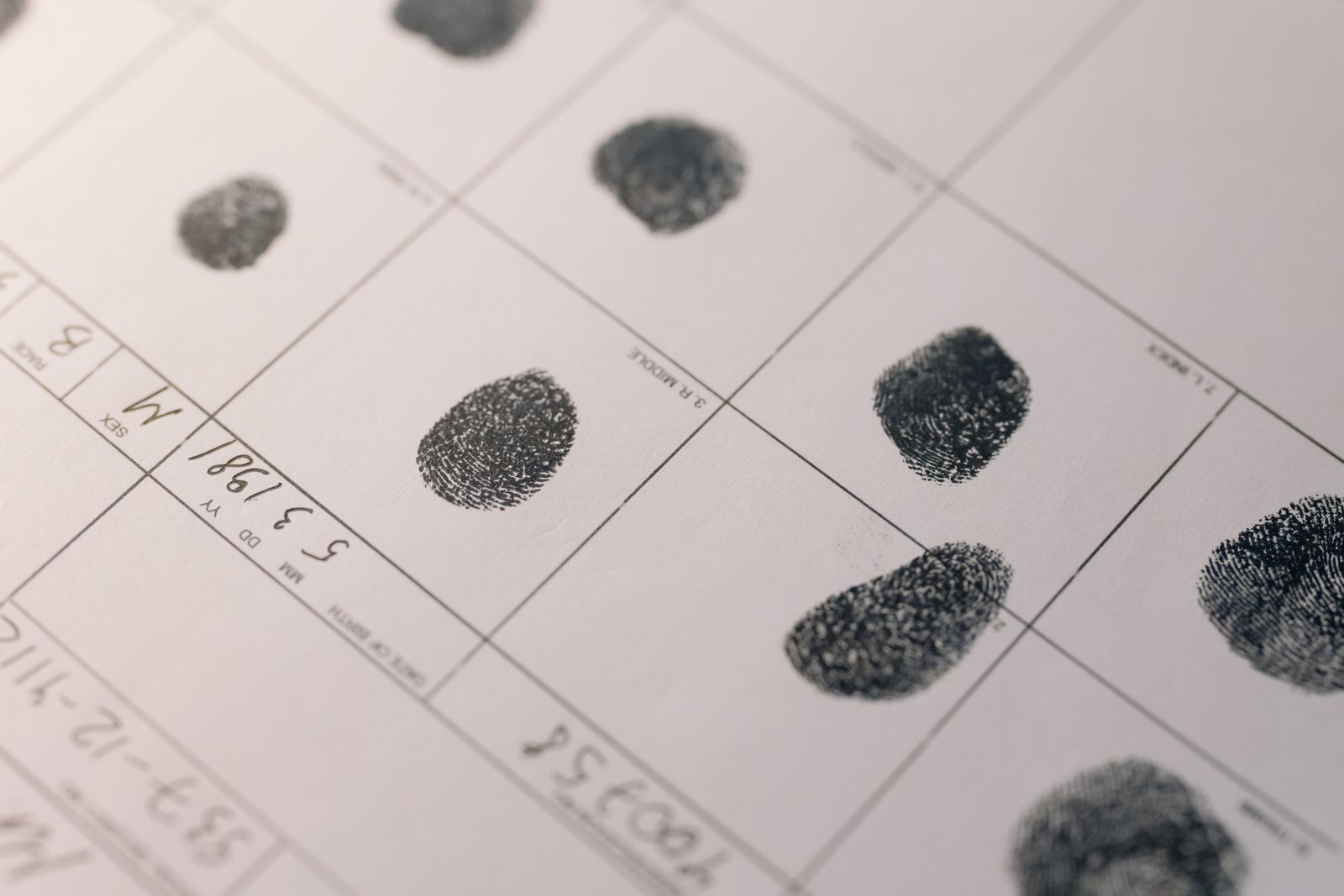 Photo by cottonbro studio on Pexels.
When does photo metadata hold up in court?
Less automatically than television suggests. Digital evidence is routinely admitted, but admissibility hinges on authentication and an unbroken chain of custody, not on the data being interesting. The moment a device is seized, examiners hash the files — typically with SHA-256 — so any later alteration would change the fingerprint and be detectable. The National Institute of Justice publishes a guide to the forensic examination of digital evidence precisely because the procedure, not the cleverness of the analysis, is what survives cross-examination.
The other reason for caution is that EXIF is editable. Timestamps, descriptions, the Software tag, and even GPS coordinates can be rewritten by anyone with a metadata editor, so a careful examiner never treats a single field as self-proving. Its evidential value comes from corroboration — a GPS coordinate backed by cell-tower records, a timestamp consistent with a PRNU match and the pixel analysis. Metadata opens the investigation; it rarely closes it alone.
What can't photo metadata forensics do?
The honest limits matter as much as the capabilities. Metadata is fragile in a way that cuts both ways: the fields that convict are trivially removed. A few seconds in any stripping tool, or a single trip through a platform that re-encodes uploads, and the GPS tag, the timestamp, and the serial number are gone — which is exactly why investigators lean on PRNU and pixel analysis when they have to. By the same token, the absence of metadata proves nothing about guilt; it usually just means the file was processed.
PRNU has real constraints too. It needs reference images from the suspect device to build a fingerprint, and its reliability falls off with compression and small crops. And no metadata technique touches what is plainly visible in the frame: a street sign, a storefront, a skyline. Visual geolocation works on the pixels, not the tags, so stripping EXIF does not hide a location that the image itself reveals. We unpack that gap in how journalists use photo metadata to track people. Forensics is a toolkit of overlapping, imperfect methods — which is why examiners corroborate rather than rely on any one of them.
How do you keep your own metadata out of the wrong hands?
The reassuring flip side of all this is that the data forensic examiners prize is the same data you can remove before a photo ever leaves your phone. If a picture carries no GPS coordinate, no timestamp, and no serial number, there is nothing in the metadata to read. Run an image through Metadata Cleaner and it strips the EXIF block, the GPS IFD, the device make, model and serial, the MakerNote, and the embedded thumbnail — locally in your browser, so the original never uploads anywhere. The step-by-step is in the box above, and our full walkthrough on how to strip EXIF data from a photo covers the same process across Mac, Windows and iPhone.
Two honest caveats apply, the same ones examiners work around. Stripping metadata does nothing to the pixels — if your location is visible in the shot, removing tags won't hide it. And removal only helps if you do it before sharing; cleaning a file after you have uploaded the original does not claw the metadata back. Clean first, share second.
The bottom line
Forensic experts solve cases with photo metadata because that metadata is precise, automatic, and usually unnoticed by the person who created it. EXIF places a device at a time and a coordinate; the MakerNote ties images to one camera; and when the metadata is gone, the sensor's own PRNU fingerprint and the statistics of the pixels can still speak. The same record that convicts is the record you can erase in seconds — and the choice of whether your photos carry it is, for now, entirely yours.
Try Metadata Cleaner free — strip EXIF, GPS, device serial numbers and the embedded thumbnail from any photo, locally in your browser, before it ever reaches an upload.